
Pinterest is often mistaken for another short-video feed, but its logic is different. People do not usually open Pinterest to watch whatever is newest, because they open it to find an idea or solve a problem.
This guide explains how Pinterest reads a video, how a pin moves from a small test audience to wider distribution, and what creators can do to give useful videos a fair chance.

Pinterest Rewards Usefulness, Not Just Views
The first difference is intent, because a video on a trend-led platform can spread simply by being surprising. On Pinterest, a video tends to spread because it helps someone learn a technique, plan a room, or start a project.
A save means someone wants to return to the idea, and a click means someone wants more detail, while a like alone tells Pinterest much less. Pinterest therefore values action-oriented tutorials, tips, and how-to guides, even months after posting.
How Pinterest Reads a Video Pin
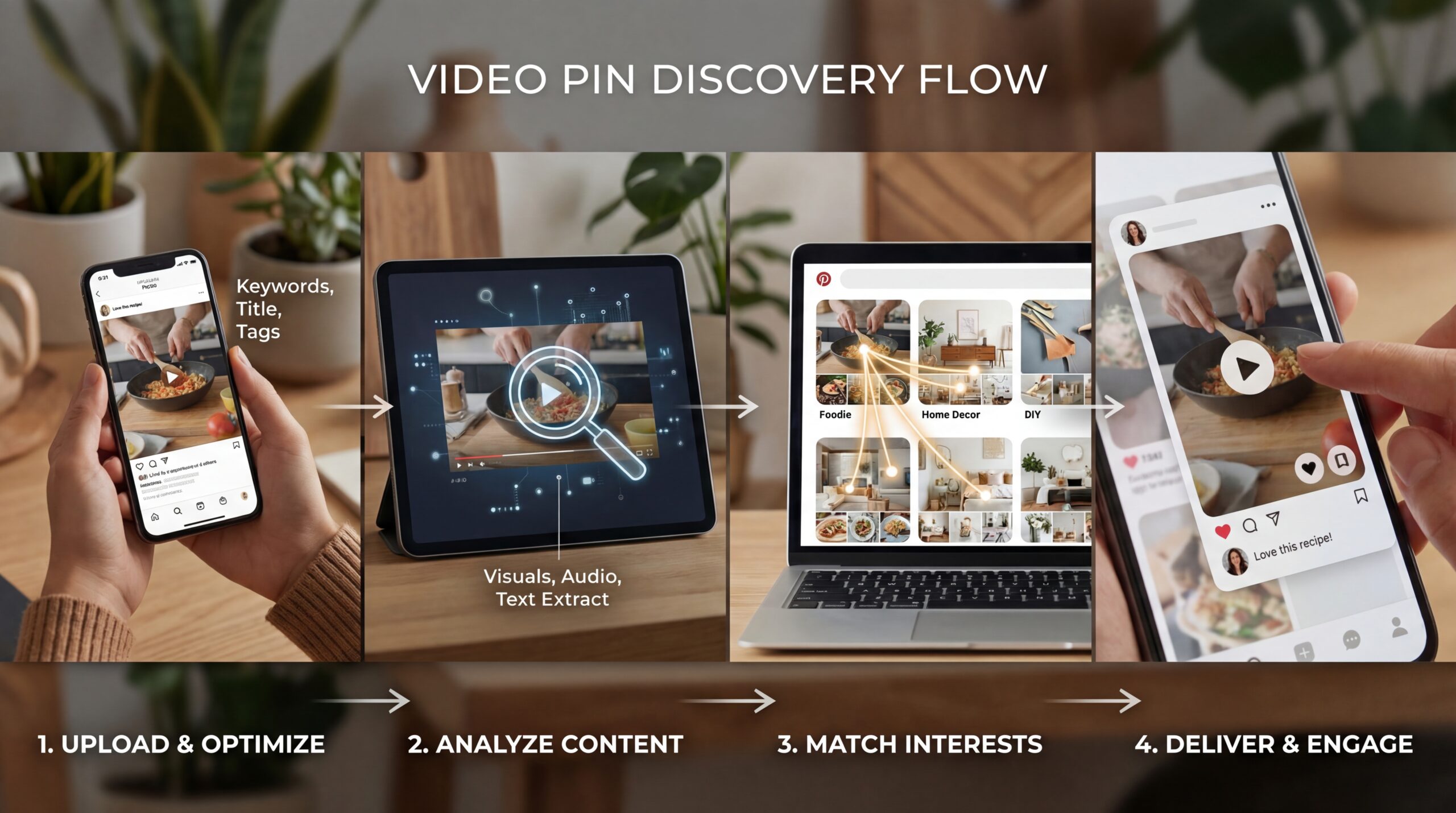
Pinterest cannot watch a video the way a person does, so it gathers clues from several places at once. Written details matter first, because the title, description, and board name explain the topic and audience.
The cover image matters too, because a clear thumbnail helps viewers and Pinterest understand what the video shows. Viewer behaviour and surrounding context complete the picture, including saves, clicks, boards, and related pins.
- Title, description, and board name explain the topic and audience.
- A clear cover image shows what the video is about at a glance.
- Saves, close-ups, and clicks show whether viewers found it useful.
- Board and account context help place the video in a topic area.
The Life of a Video Pin, Stage by Stage
A video pin rarely reaches a wide audience all at once, and it usually moves through stages instead. Pinterest first shows the new video to a small test audience, and then measures saves, watch time, and click-throughs.
If those signals are strong, wider distribution can follow, and the video can appear for more searchers and in recommendation feeds. Fresh pins give Pinterest new material to test, and seasonal ideas can return each year.
| Stage | What usually happens |
|---|---|
| Small first audience | Pinterest tests the new video with a limited group |
| Early signals | Saves, watch time, close-ups, and clicks are measured |
| Wider distribution | Strong signals can lead to more search and feed placement |
| Long-term discovery | Useful videos can keep appearing in search for months |
Keywords Still Matter a Lot
Because Pinterest works like a search engine, keywords are not an optional extra. They are how the right audience finds the video, using clear, natural wording that matches how a real person would search.
The title should state the topic and benefit in plain words, and the description should explain what the viewer will learn. The board name should match the topic, a descriptive file name can add one more clue, and missing keywords can leave a video invisible in search.
Watch Time, Saves, and Clicks
Pinterest pays attention to how long people watch, but a short video answering a question quickly can do well, as can a longer tutorial. What hurts is a slow or unclear opening, because viewers move on if they cannot tell what the video will help them do.
Short videos of 15 to 60 seconds suit quick answers, while longer videos of up to 5 minutes can reward detailed tutorials. A concise hook in the first 3 to 5 seconds helps, and Pinterest favours clarity over drama.
The strongest signals involve an action showing intent to use the idea later, such as saving, watching again, or clicking through. Comments add feedback, but they are less central than saves and clicks.

Boards, Format, and Common Mistakes
Where you pin a video matters, because Pinterest organises content around boards in a way other platforms do not. Relevant, niche-specific boards improve discoverability, and group boards can help when they match the topic.
Format tips follow the same principle of clarity, with a vertical 9:16 ratio working best for mobile viewers. Clear thumbnails, text overlays, and loopable content help, while ignoring keywords, using horizontal video, or posting without a relevant board can hold a video back.
Organic pins rely on relevance, engagement, and keyword optimisation, with long-term traffic and saves as the goal. Promoted pins use paid exposure to accelerate testing, but monitor analytics, try different thumbnails, and post consistently.
Frequently Asked Questions
Why do saves matter more than views on Pinterest?
Saves show that someone wants to return to an idea later, while a view alone may mean only a brief glance. Pinterest treats that intent to reuse as a stronger signal of value.
How long should a Pinterest video pin be?
Short videos of 15 to 60 seconds suit quick answers, while detailed tutorials can run up to 5 minutes. The opening should still make the main idea clear in the first few seconds.
Do keywords really affect video pins?
Yes, because Pinterest works like a search engine and reads titles, descriptions, and board names. Clear, natural keywords help the right searchers find the video.
Can an old video pin gain traction later?
Yes, because Pinterest can keep showing useful videos in search for months or years. Steady saves, clicks, and fresh pins can help older content keep being discovered.
Disclaimer
This article shares general information about how Pinterest is described to work, not legal advice. Platform behaviour can change, so treat these patterns as general guidance and check current Pinterest guidance for your own account.
Related reading: Why Pinterest Is a Goldmine for Evergreen Content and How Long Does It Take for Pinterest Content to Rank on Google?
Conclusion
The Pinterest algorithm favours videos that help people, are easy to find through clear wording, sit on relevant boards, and earn saves and clicks. It tests new videos with a small audience and keeps useful ones in circulation.
Focus on that simple formula, review what the signals tell you, and post consistently. Do that well, and your videos can be found again and again.