
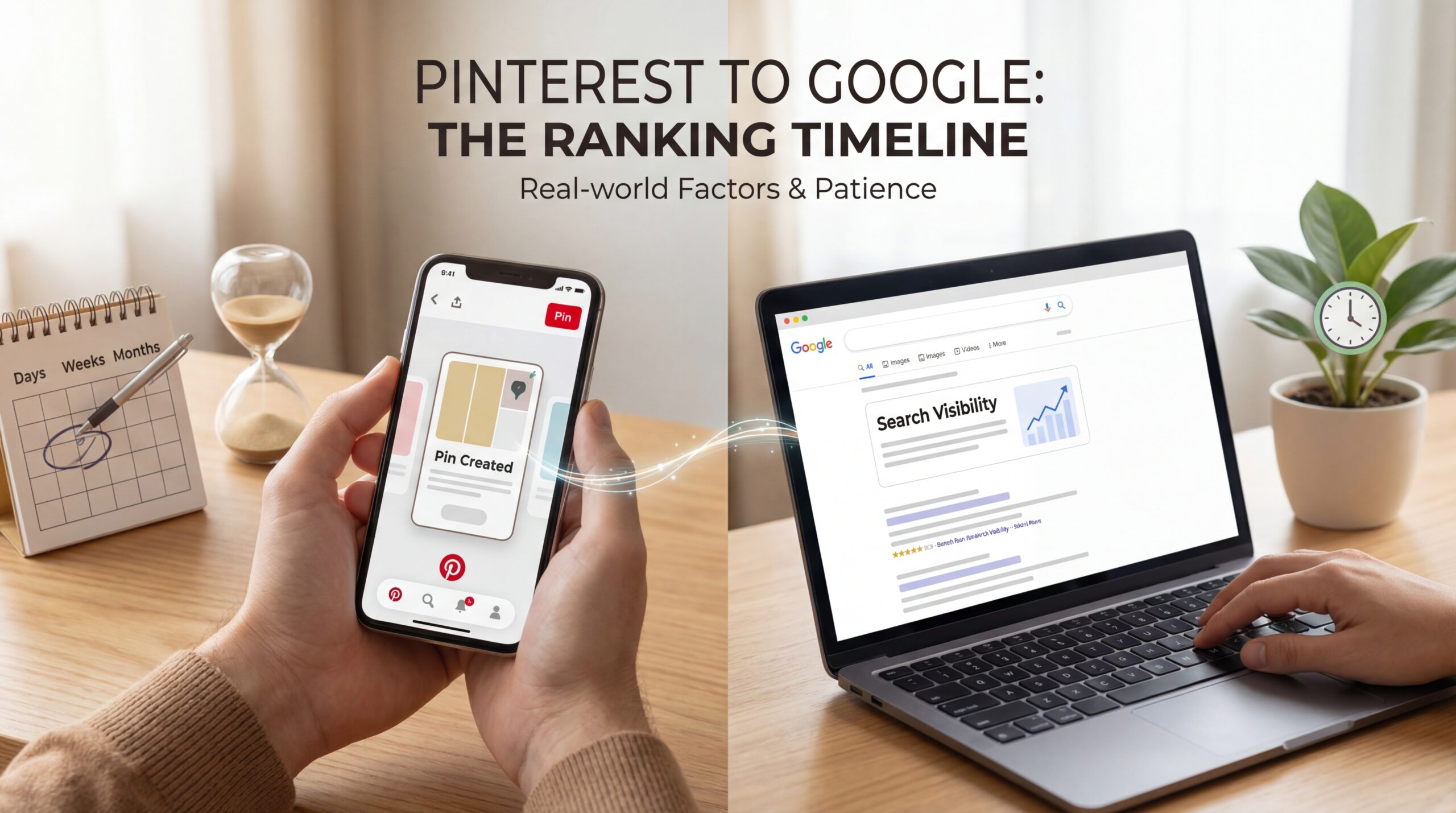
If you’re pinning content on Pinterest and expecting instant Google traffic, brace yourself: it’s not magic, it’s strategy. Pinterest content can drive search traffic for months and even years, but the timeline depends on multiple factors that most creators overlook. Understanding how long it takes for Pinterest content to rank on Google—and what you can do to speed it up—can be the difference between wasted effort and a steady stream of organic traffic.
Let’s unpack this, step by step, with practical insights and real-world examples.
1. Pinterest Isn’t Just Social Media—It’s a Search Engine
Most people treat Pinterest like Instagram or TikTok, but here’s the kicker: Pinterest behaves more like Google than a social feed. When you optimize a pin for a keyword, Google can pick it up and start ranking it in search results.
The important distinction: Pinterest content doesn’t rely on virality. Its longevity comes from search intent. A well-optimized pin might take a few weeks to show traction on Pinterest, and once it does, it can get indexed by Google within a similar timeframe—sometimes faster if your Pinterest profile is authoritative.
2. Typical Timeline for Pinterest Content to Rank on Google
The reality? There’s no exact number, but based on marketing experience and SEO studies:
- Week 0–2: Pin is live. Google may not index it immediately. Pinterest itself might start showing impressions, but rankings are low.
- Week 3–6: Google begins crawling and indexing pins, especially if you’ve linked to your blog or website.
- Month 2–3: Initial ranking positions start appearing. You might see some clicks from Google search.
- Month 3–6: Traffic starts to increase steadily as Pinterest signals (saves, clicks, engagement) send authority to Google.
- Month 6–12: Mature content often reaches peak Google visibility. Evergreen pins continue to gain impressions and clicks for years, depending on niche and optimization.
So, expect 3–6 months for meaningful Google traffic, with full potential sometimes taking a year. That might sound slow if you’re used to TikTok virality, but this is the long-term traffic game.
3. Factors That Affect How Fast Pinterest Content Ranks
Not all pins are created equal. Several elements influence how quickly your Pinterest content shows up on Google:
a) Domain Authority
- Pins linking to high-authority blogs or websites rank faster.
- New blogs take longer; Google wants to see trust signals.
b) Keyword Optimization
- Pin titles, descriptions, and image alt text matter.
- Target long-tail keywords with clear search intent for faster indexing.
c) Engagement Signals
- Saves, clicks, and re-pins indicate value. Pinterest engagement sends ranking signals to Google.
- A pin with zero engagement may languish.
d) Consistency and Frequency
- Regular pinning signals to Pinterest and Google that you’re active, which can speed up indexing.
e) Visual Quality
- Clear, vertical images with overlays perform better.
- Infographics or step-by-step guides often gain traction faster because users save them.
4. How Google Sees Pinterest Content
Google indexes Pinterest differently than standard blog content:
- Rich Pins: These include extra information like article title, description, and link. Google favors these for indexing.
- Pin URL vs Website URL: Google sometimes ranks the pin itself, sometimes the linked blog. Optimizing both increases visibility.
- Engagement as a Ranking Signal: High engagement on Pinterest sends indirect signals to Google that the content is valuable.
In practice, this means a single well-optimized pin can appear in Google search weeks after posting if it has strong visuals, keywords, and engagement.
5. Niches Influence Ranking Speed
Not all topics are equal. Some niches rank faster because competition is lower:
- Fast ranking niches: DIY, recipes, home decor, seasonal content.
- Moderate ranking niches: Fitness tips, personal finance, fashion guides.
- Slow ranking niches: Highly competitive niches like tech news, viral trends, or broad “how-to” topics.
For example, a pin on “Easy Summer Salad Recipes” might start showing up on Google within weeks, while a general “Marketing Tips” pin may take months to gain traction.
6. Tips to Speed Up Pinterest Content Ranking on Google
If you want to accelerate the process, here’s what works:
- Use Long-Tail Keywords
Optimize your pin and board for specific phrases that users are searching for. Example:- “Quick keto breakfast recipes for beginners” instead of “Keto recipes.”
- Enable Rich Pins
Rich Pins give Google more information to index, boosting your chances to rank faster. - Link to High-Quality Content
Google favors pins linking to authoritative, well-structured blogs. - Encourage Engagement
Ask users to save pins, and create compelling visuals that invite interaction. - Regular Pinning
Consistency matters. Pin multiple times per week to show Pinterest and Google that your content is active. - Repurpose Evergreen Content
Make multiple pins from a single blog post. Different titles, images, or layouts can accelerate indexing and broaden reach.
7. The Secret Advantage: Evergreen Power
Unlike TikTok or Instagram, where content dies in days, Pinterest builds over time. A pin that doesn’t rank immediately isn’t a failure—it’s a long-term asset. Some marketers see months of traffic growth from a single pin, and pins from 2–3 years ago still outperform newer content if optimized properly.
Think of Pinterest as a slow-burning SEO machine. Google indexes it, Pinterest drives engagement, and over time, your content climbs rankings naturally.
8. Realistic Expectations
If you’re expecting overnight Google traffic from Pinterest, you’ll be disappointed. But if you approach it as a long-term SEO strategy, the rewards are enormous:
- A single blog post + optimized pin = years of referral traffic
- Pinterest content often converts better because users are planning, researching, and ready to act
- One pin can outperform dozens of social posts on TikTok or Instagram in long-term ROI
Key Takeaways: Pinterest and Google Rankings
- 3–6 months is typical for meaningful Google ranking. Full potential may take up to a year.
- Engagement matters: saves, clicks, and shares accelerate indexing.
- Keywords are crucial: titles, descriptions, boards, and alt text all count.
- Rich Pins help Google understand and index your content faster.
- Niche and competition affect speed—low-competition, highly targeted topics rank faster.
- Pinterest content compounds over time—long-term traffic is far more valuable than instant virality.