
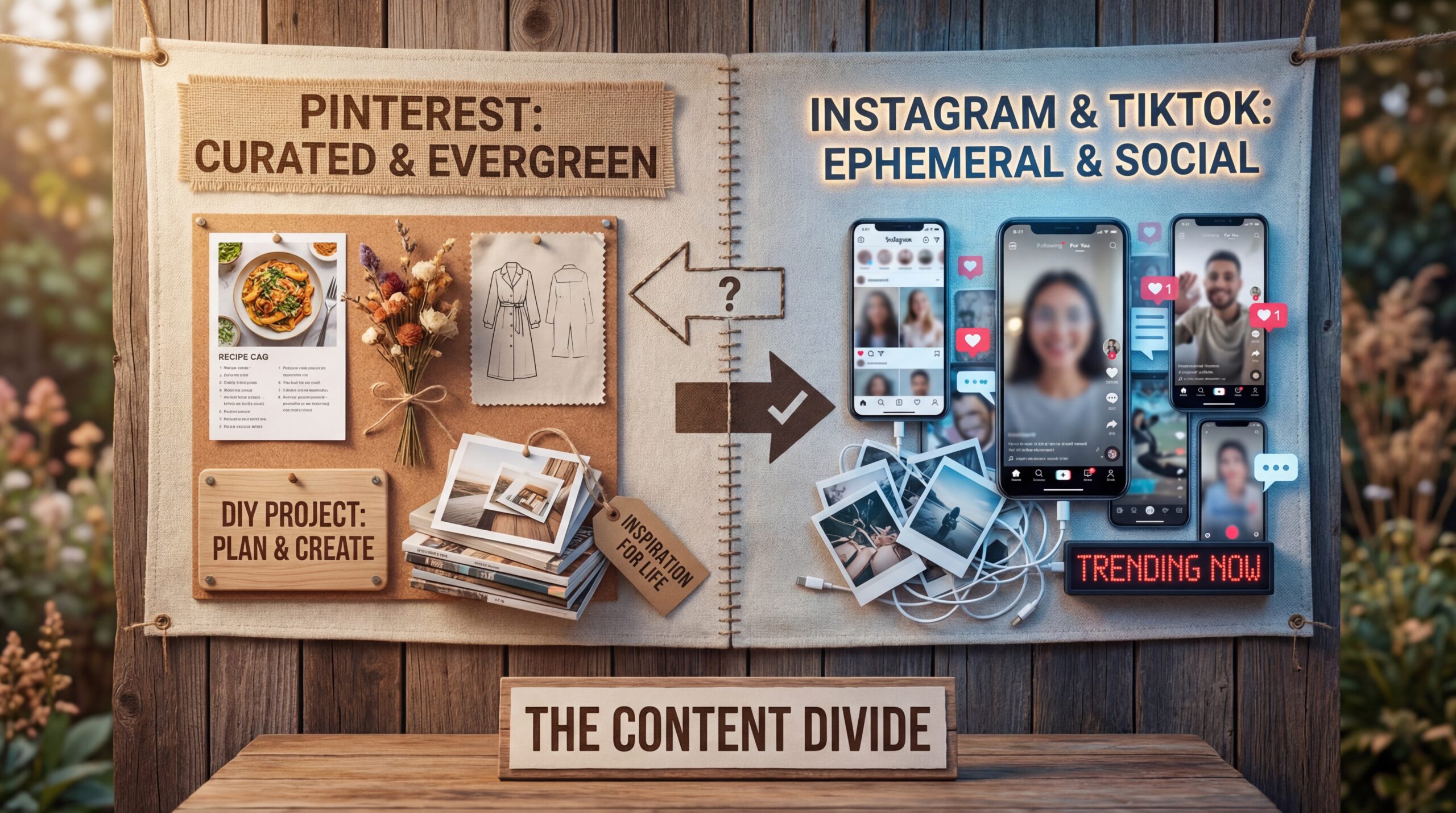
If you think all social media platforms are the same, think again. Instagram, TikTok, and Pinterest might all be “visual” platforms, but they behave like entirely different creatures. You wouldn’t compare a cheetah to a hummingbird and call them both fast, would you? That’s exactly what people do when they lump Pinterest in with Instagram and TikTok. The reality? Pinterest plays a long game while the other two are all about speed, trends, and instant dopamine hits.
Let’s break this down, layer by layer, because understanding this is the difference between posting content that dies quietly in the void and content that keeps bringing traffic months down the line.
1. Pinterest Is a Search Engine, Not a Social Feed
Here’s the first major twist that blows most people’s minds: Pinterest is closer to Google than Instagram. While TikTok and Instagram rely on follower counts and trending loops to decide what shows up on a feed, Pinterest uses an algorithm designed to help people find answers, ideas, and inspiration.
Think about it. Someone pins a recipe for “homemade sourdough bread,” and six months later, a completely different user sees it because Pinterest says: “Hey, this looks like what you’re searching for.” That’s a traffic lifespan Instagram creators can only dream of. On TikTok, if a video isn’t trending now, it’s dead tomorrow. On Pinterest, content ages like fine wine.
The implication? Your Pinterest content needs searchable intent, good keywords, and useful visuals, not just trendy dances or flashy filters.
2. Pinterest Values Evergreen Content Over Virality
On TikTok, it’s all about the viral moment. A dance, a meme, or a quick hack could explode in hours—or fizzle out just as fast. Instagram sits somewhere in the middle, giving you a mix of discovery and social proof through Reels and Stories. Pinterest, though? It’s the antithesis of “viral today, gone tomorrow.”
Pins that hit the sweet spot can bring traffic for months or even years. That’s because users don’t visit Pinterest for fleeting entertainment—they visit for solutions.
- TikTok: “Watch, laugh, forget.”
- Instagram: “Like, scroll, double-tap, maybe save.”
- Pinterest: “Plan, save, act.”
You see the difference? Pinterest is inherently action-oriented, while the others are reaction-oriented. That’s a subtle distinction, but it completely changes the type of content you should create.
3. Pinterest Content Needs Purpose, Not Personality (Mostly)
Here’s where Instagram and TikTok shine: personality. They reward charisma, humor, and relatability. You can be messy, chaotic, loud—TikTok thrives on it. Instagram leans into lifestyle and aspirational imagery. But Pinterest? The platform doesn’t care if you’re hilarious or trendy. It cares if your pin answers a question, solves a problem, or inspires a project.
Yes, aesthetic matters (Pinterest is still visually-driven), but clarity beats creativity every time. A step-by-step tutorial with clean images will outperform a funny reel with zero context. This isn’t to say personality is useless—just that it’s secondary. Your content should be functional first, stylish second, entertaining optional.
4. The Role of Keywords Cannot Be Ignored
On Instagram, hashtags are more like polite suggestions. TikTok’s captions and hashtags are sometimes powerful but heavily trend-driven. Pinterest? Keywords are everything. Treat it like a mini SEO project. Your titles, descriptions, and even image text can determine whether your content survives the first week or is buried in obscurity.
- On Instagram/TikTok: “Catchy caption = clicks”
- On Pinterest: “Relevant keyword + actionable image = clicks now and clicks later”
Think of Pinterest as the bridge between Google search and social media. If you ignore keyword research, your pins are like shouting into a void.
5. Vertical Content Rules, But Context Matters
Yes, Pinterest prefers vertical images (2:3 ratio is ideal), just like TikTok and Instagram Reels. But here’s the nuance: on Pinterest, vertical content must clearly communicate its purpose even before you read the description. Users scroll with intent—they’re not casually bingeing for entertainment.
For example:
- TikTok: Quick hook, flashy thumbnail, trending sound.
- Instagram Reels: Eye-catching, emotional, and sharable.
- Pinterest: Informative thumbnail + overlay text that says exactly what they’ll get if they click.
It’s a subtle difference, but it separates “scroll-stopper” content from “evergreen gold.”
6. The Algorithm Rewards Action, Not Likes
Here’s a shocker for creators used to TikTok metrics: Pinterest doesn’t care much about likes. Saves, clicks, and re-pins are the real currency. Engagement here is measured by intent-driven interactions, not vanity metrics.
- TikTok: “How many views did I get?”
- Instagram: “How many likes and comments?”
- Pinterest: “How many people saved this to act later?”
This is why businesses that struggle on Instagram/TikTok often crush it on Pinterest. Your audience isn’t just scrolling—they’re planning. And planners tend to spend money, which is why Pinterest has such a high commercial value.
7. Pinterest Encourages Longer-Form Thought in Bite-Sized Visuals
One thing many people overlook: Pinterest is a hybrid between image and article. You can’t just slap a pretty photo on it and expect magic. Pins that succeed often include:
- Step-by-step visuals
- Infographics
- Clear overlays explaining the benefit or tutorial
This contrasts sharply with TikTok’s short, looped video format or Instagram’s aesthetically-driven grid. Pinterest content invites you to pause, think, and save. It rewards creators who teach, inform, or inspire rather than just entertain.
8. Pinterest Drives Traffic, Not Just Attention
If you’ve ever posted a viral TikTok or Instagram Reel, you know the thrill of views—but the heartbreak of almost zero website traffic. Pinterest is the grandparent of referral traffic. Pins link directly to blogs, products, and landing pages, often months after posting.
This is a fundamental distinction: Instagram and TikTok are engagement-first platforms. Pinterest is a conversion-first platform. For bloggers, e-commerce stores, and creators who want consistent, long-term traffic, Pinterest is the silent MVP.
9. The Demographics and User Intent Matter
Most people think Pinterest is “for moms and crafters,” but that’s outdated. Today’s Pinterest audience spans a wide age range, global demographics, and niches from finance to fitness to tech. What ties them together? Active intent. People come here to:
- Plan projects
- Find inspiration
- Solve problems
TikTok users are younger and entertainment-focused. Instagram skews aspirational and social. Pinterest is purposeful. Understanding this makes all the difference when you craft content strategies.
10. Strategy: Pinterest Demands Patience
Finally, the harsh truth: Pinterest isn’t about instant gratification. You can’t post a pin today and expect overnight virality like TikTok. Pinterest rewards patience, consistency, and smart keyword strategy.
- TikTok = sprint
- Instagram = relay race
- Pinterest = marathon
If you stick with it, though, the rewards are compounding, like interest on a savings account. That’s why savvy marketers swear by Pinterest for long-term ROI.
Key Takeaways: Stop Treating Pinterest Like Instagram or TikTok
If you want to succeed on Pinterest, remember:
- Treat it like a search engine, not a social feed.
- Create evergreen content that solves problems.
- Focus on clarity over personality (at least at first).
- Use keywords like a pro—titles, descriptions, and image overlays matter.
- Vertical content must communicate instantly.
- Prioritize saves, clicks, and re-pins over likes.
- Use images to teach, inform, or inspire.
- Think long-term: Pinterest drives traffic months after posting.
- Know your audience and their intent.
- Be patient—Pinterest is a marathon, not a sprint.
If you approach Pinterest the same way you approach TikTok or Instagram, you’re setting yourself up for frustration. But if you embrace its unique nature, it can become one of the most powerful content engines you’ve ever touched.